Understanding Scar Removal
Nov 17, 2026
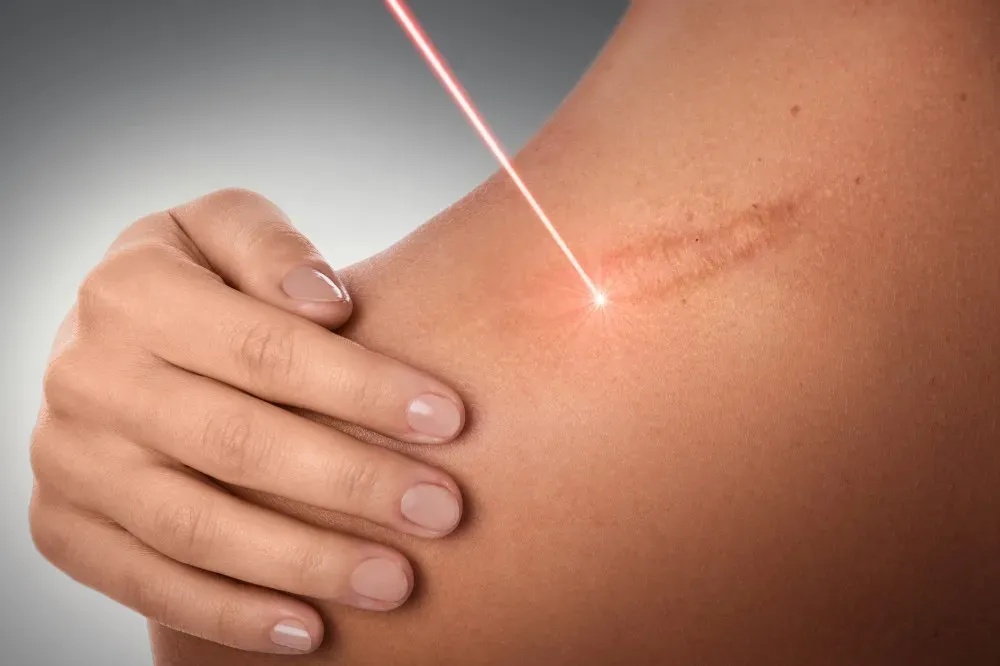
Scars are permanent because your body doesn’t erase them on its own. The collagen your skin laid down during healing is structurally different from the tissue it replaced, and no cream or home remedy changes that at a fundamental level.
What dermatologists can do is revise a scar — reshape it, flatten it, fade it, or resurface the skin around it until it blends in rather than standing out.
Nearly 50,930 scar revision procedures were performed in the United States in 2022 alone. At Vivida Dermatology, our team offers both surgical and nonsurgical scar revision at our offices in Las Vegas and Henderson, Nevada, and St. George, Utah.
When your skin is injured, whether from surgery, trauma, acne, or a burn, it patches the damage with collagen. The collagen fibers line up in a single direction rather than the cross-hatched pattern of undamaged skin, which is why scar tissue looks and feels different from the skin around it.
How noticeable a scar becomes depends on the depth of the original injury, where it sits on your body, how your skin healed, and your genetics. Some people scar minimally. Others produce thick, raised, or discolored tissue that goes well beyond what the original wound would suggest.
Not all scars respond to the same treatment, so identifying the type guides the approach.
These sit below the surface of the surrounding skin. Acne scars are the most common example — the pitted, indented marks left behind after deep breakouts. They form when the healing process doesn’t produce enough collagen to fill the wound.
These scars rise above the skin’s surface but stay contained within the borders of the original wound. They result from the body producing more collagen than the repair needs. Many flatten and soften on their own over time, though some remain thick.
Keloids grow past the edges of the original wound and keep expanding. They tend to be hard, sometimes darker than the surrounding skin, and may itch or feel sore.
Burn injuries often cause contracture scars, which tighten the skin and can restrict movement. These scars sometimes extend into the muscle and tissue beneath the skin’s surface.
Many scars respond well to nonsurgical approaches, especially acne scars and smaller surgical or injury scars. Options include:
These treatments often require a series of sessions, and results build gradually as the skin remodels. Your dermatologist selects the approach based on the scar type, its location, and your skin tone, since some treatments carry pigmentation risks for darker skin.
Larger, deeper, or more prominent scars sometimes need surgical correction. Scar revision surgery removes the old scar tissue and closes the wound with techniques designed to heal more cleanly.
Your surgeon may use Z- or W-shaped incisions rather than a straight line, which gives the skin more flexibility as it heals and helps the new scar blend with natural skin folds and creases. When there isn’t enough healthy skin around the scar to close the wound, a skin graft from another part of your body may fill the gap.
Scar revision surgery doesn’t eliminate the scar entirely; it replaces a conspicuous one with a less visible one that sits flatter and blends better with the surrounding skin.
Every scar revision at Vivida is planned around the type, size, and location of your scar. To find out which approach fits your situation, contact one of our offices today.